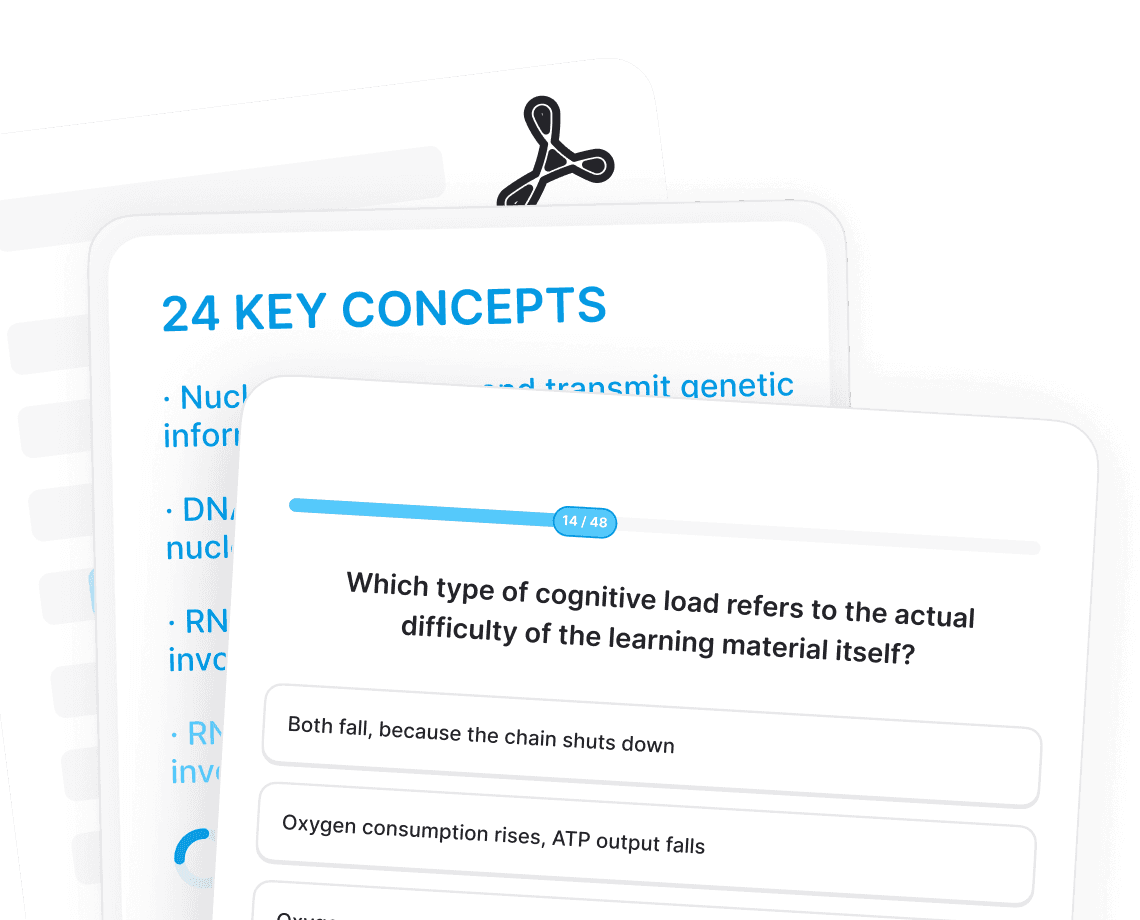
Why does the electron transport chain stop without oxygen?
Oxygen is the terminal electron acceptor at Complex IV. With nothing to accept electrons, the chain backs up and ATP synthesis halts.
Oxygen is the terminal electron acceptor at Complex IV. With nothing to accept electrons, the chain backs up and ATP synthesis halts.
Each carrier in the chain has a higher reduction potential than the one before it, so electrons move downhill in energy.
Oxygen accepts those electrons at Complex IV and combines with protons to form water.
This is the step that keeps the whole chain turning over.
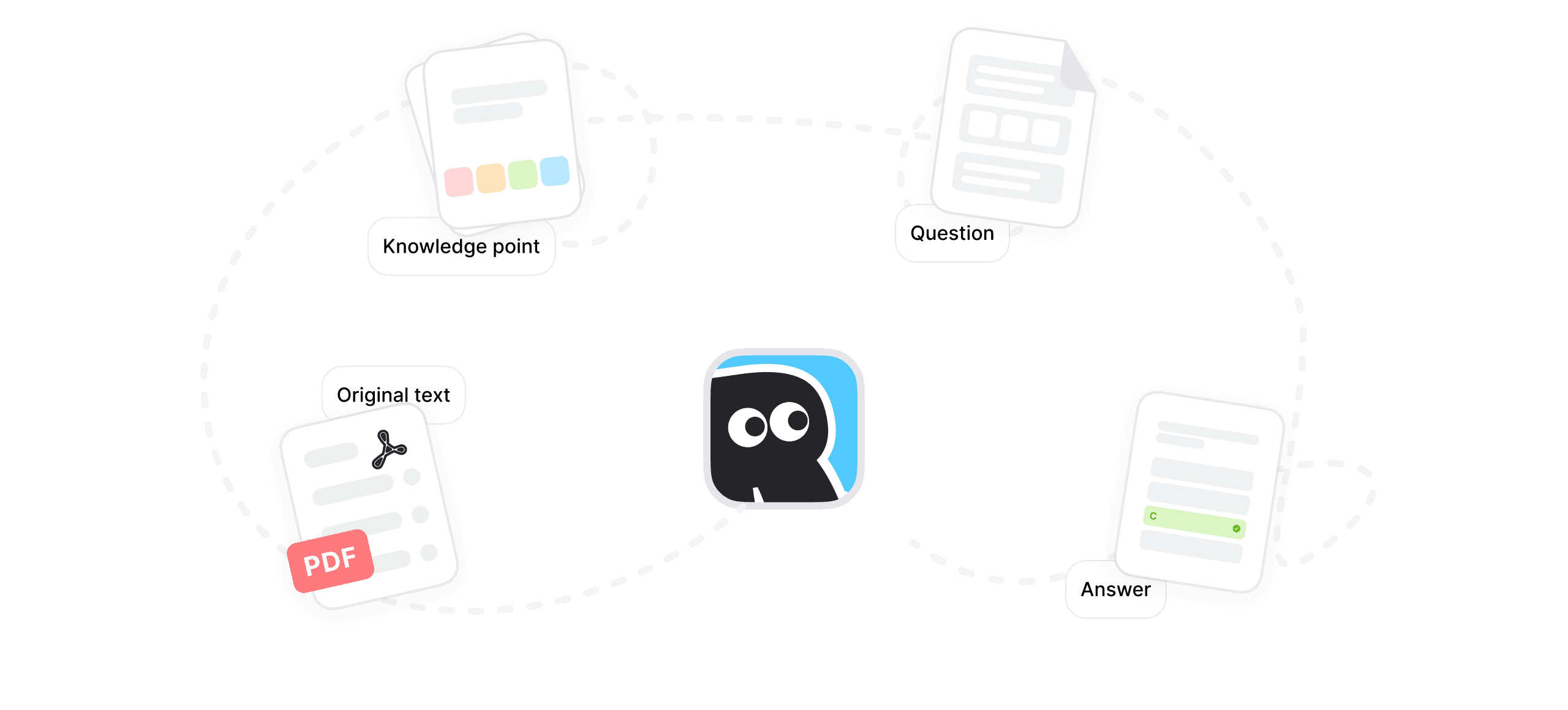
Three sources, three different pages, three different passages. Each one opens the PDF where it came from.
Remka keeps the source, knowledge point, question, and answer together.
They are not scores. They describe four recall outcomes and also act as keyboard shortcuts in review. Rate the real recall difficulty, not the interval you want.
The answer was wrong or blank, or it only felt familiar after you revealed it.
This is the only failing outcome. FSRS records that retrieval did not succeed.
The answer was wrong or blank, or it only felt familiar after you revealed it.
If you eventually recalled the correct answer with great effort, choose 2 “Hard”.
You answered correctly, but only after serious hesitation or mental effort, or the answer was barely complete.
FSRS treats this as successful recall, but a clearly difficult retrieval.
It usually brings the card back sooner than 3 “Good”, so a harder card gets another review earlier.
Do not choose 2 after an incorrect answer. FSRS treats “Hard” as a successful recall.
You answered correctly with ordinary thought or a brief pause, without serious struggle.
This is a normal successful recall and the usual choice for an ordinarily correct answer.
FSRS uses the card’s current difficulty, stability, and review history to calculate its next appearance.
Do not choose 3 because you prefer the displayed interval; describe the real recall experience.
You answered almost immediately, completely, and confidently, with little or no effort.
FSRS treats this as the easiest successful recall.
It usually produces the longest of the four intervals, leaving more time for cards you are likelier to forget.
Feeling familiar after revealing the answer is not “Easy”; recall must be effortless before the reveal.
Spend review time on the cards you are more likely to forget. Watch the same 24 cards move to different next review times under both schedules.
BEFORE / AFTER

 Recall failed